

Project Ability is dedicated to minimising its impact on the environment and we aim to make our workshops, exhibitions and operations as sustainable as possible. We have made, and are making, lots of changes to reduce our carbon footprint but there is still lots to do. We regularly engage with specialists, partners and neighbours to learn from, and share best practice, resources and innovations. And, we have improved our reporting on our carbon emissions every year.
Objectives
- Continuously find and use new and effective ways to reduce waste
- Make sure we monitor and audit our energy and waste streams to keep getting better and better
- Increase staff, volunteers, trustees, stakeholders and participants’ awareness and participation in our environmentally focused activities
- Regularly provide staff, trustees and stakeholders with reports showing how much energy we have used, how much waste we have created and what improvements we have made
- Ensure our suppliers operate with responsible environmental policies and processes
The story so far…
In 2015 Project Ability started reporting on our environmental impact. Since then we have made many improvements to our daily working practices. For example, we have replaced old technology with energy-efficient machines, saving lots of electricity. We have taken many small actions that add up. We’ve replaced non-recyclable vinyl signs used for exhibitions with paper signs that are repurposed after use. Simple things like taking individual bins away from each desk has greatly reduced the amount of plastic bin bags used each week. We have found ways to repurpose used canvases by creating unique tote bags and vase covers. All these actions help to reduce our carbon emissions.
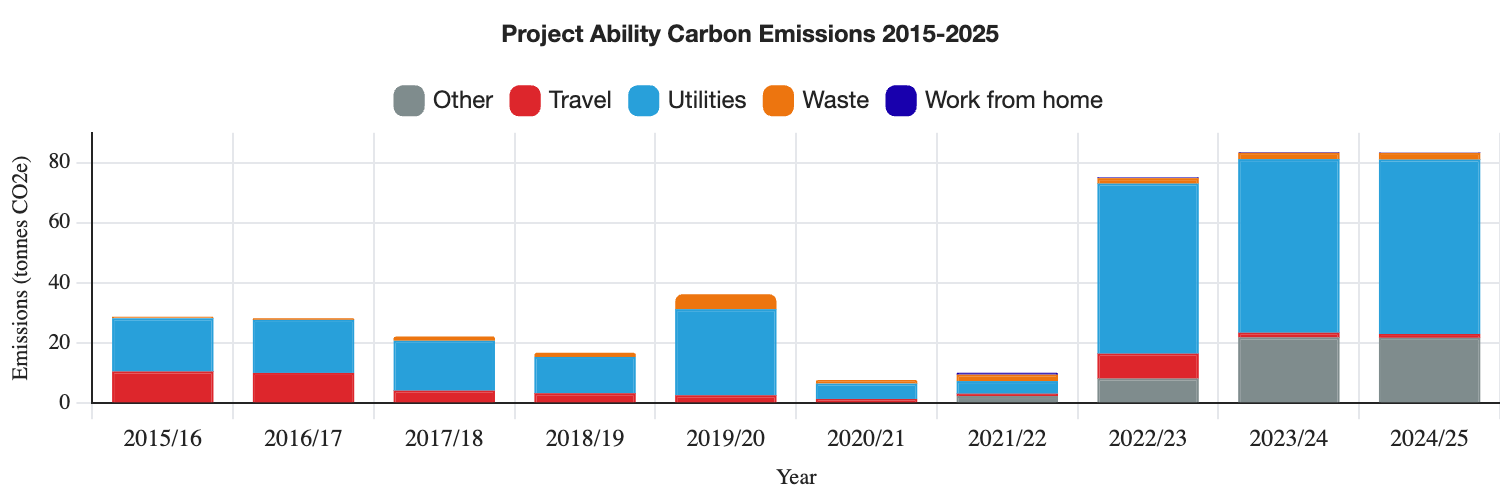
The bar chart above shows the reported carbon emissions from 2015-2025. Although it looks like the emissions drastically increased over this period, they haven’t. We’ve just got better at reporting. In 2015 we didn’t have any data on the energy we used so we couldn’t report it. Now we have much better information tracking. We are in rented premises and have no control over our gas usage for heating, so we are reporting an estimate aligned with current GHG reporting standards. Even though we are using 100% renewable electricity, we are assessed using ‘Location-based’ reporting so it still counts towards our emissions. Gas and electricity account for 70% of our reported emissions so we are doing our best to make reductions where we have influence: electricity usage, supplier management and recycling.
Statement of commitment
- Minimise how much energy and water we use
- Use materials and other supplies responsibly
- Invest in technology and equipment that is energy efficient and sustainable
- Ensure equipment is operating optimally and is not wasteful
- Factor reasonable life cycles when procuring new equipment
- Manage waste streams effectively and responsibly – reuse, recycle and repurpose materials, fittings and equipment wherever possible
- Establish and demonstrate clear reporting procedures
- Appoint suppliers who share our environmental policy principles

The United Nations established 17 Sustainable Development Goals (SDGs) in 2015 to provide a framework to help organisations work towards achieving peace and prosperity for all people and our planet. These goals provide a common language for communicating about our sustainability practices.
Project Ability have been working in alignment with three of these goals:
SGD4 Quality Education: Project Ability offer three core visual arts workshop programmes, which we deliver weekly from our fully accessible and specially equipped studios at Trongate 103:
Aspire is our visual arts workshop programme for adults with learning disabilities
ReConnect is an open studio for adults with lived experience of mental ill health
Create is our programme for children and young people with a disability aged 8+.
SDG10 Reduced Inequalities: Project Ability creates opportunities through inclusive art for all. Since 1984, we’ve been supporting, celebrating and platforming diversity within the contemporary visual arts sector. We provide a welcoming arts community for people with learning disabilities and mental ill-health. We provide the space and expertise to allow them to express themselves, build confidence and achieve their potential.
SDG12 Responsible Consumption and Production: Minimising our consumption of energy and water. Using materials and other supplies responsibly. Ensuring equipment is operating optimally and not wastefully. Managing waste streams effectively and responsibly – reusing, recycling and repurposing materials, fittings and equipment wherever possible.
Do you have an idea how we can keep improving? Send us a message


