

A Timeline of Change
Since the beginning, Project Ability, like many arts organisations, have been recycling materials and keeping waste to a minimum. It is inherent in the artist to be mindful of their impact on the natural world and avoid wastefulness.
Reusing materials, instead of disposing of them to landfill, has been built into the Project Ability ethos from day one, it almost goes without saying. The world we live in today however, we need to brag a little bit about our achievements. Being open about our activities means others can benefit from our experience.
In 1984, when the charity began, the triple planetary crisis of pollution, climate change and biodiversity loss, we recognise today, didn’t yet exist. Back then, people were blissfully unaware of the negative impact their actions would have.
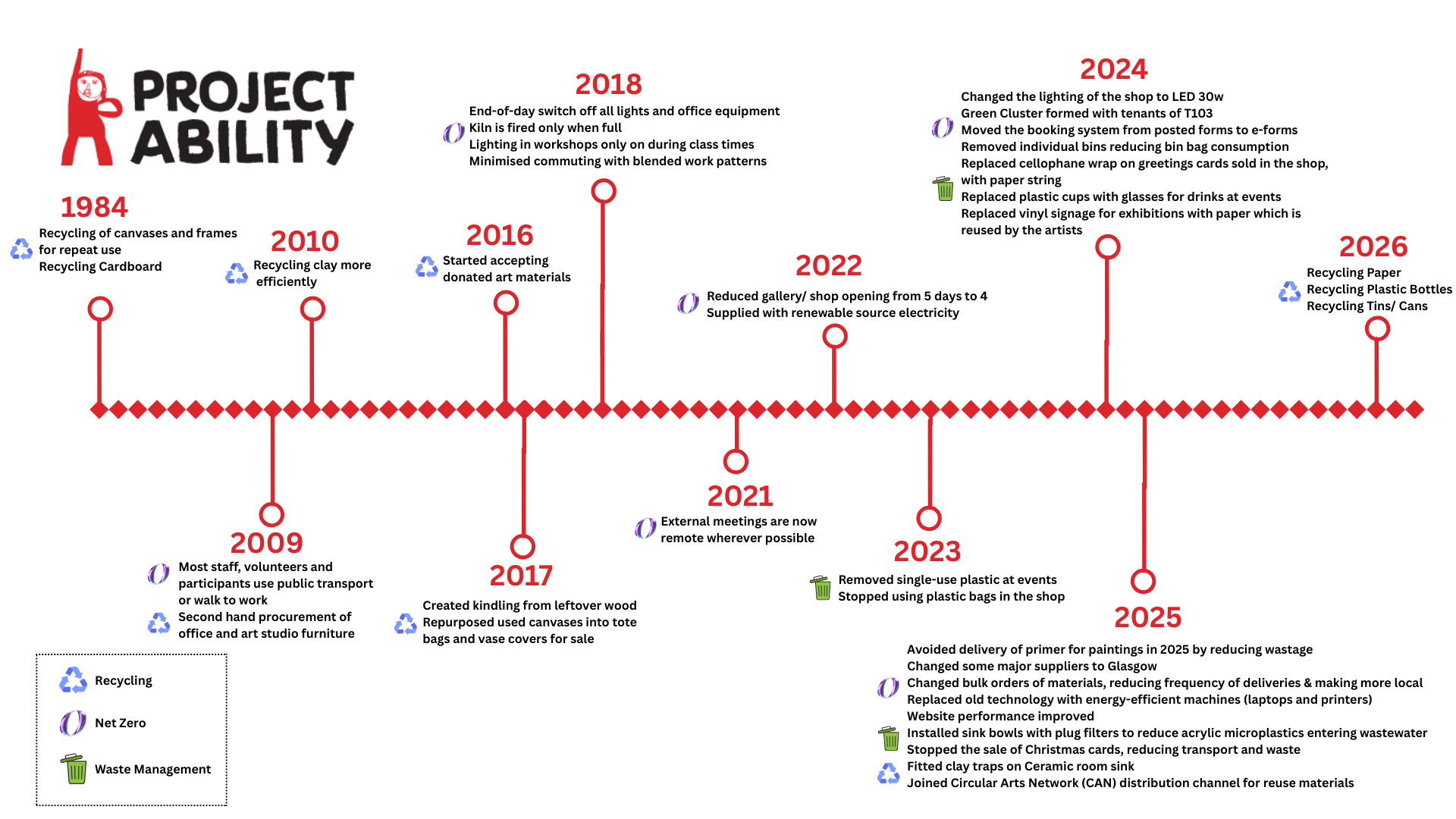
Now that we know, we can take measures to reduce our carbon emissions. The world of sustainability in 2026 is reliant on data and evidence of improvements and progress towards our net zero goals. Project Ability has measures in place to record and report our GHG emissions every year and show what we are doing every day to reduce our carbon footprint. Here are some of the actions we’ve recorded so far:
Circular Economy & Recycling Actions
- Recycling of canvases and frames for repeat use
- Recycling Cardboard
- Second hand procurement of office and art studio furniture
- Recycling clay more efficiently
- Started accepting donated art materials
- Created kindling from leftover wood
- Repurposed used canvases into tote bags and vase covers for sale
- Fitted clay traps on Ceramic room sink
- Joined Circular Arts Network (CAN) distribution channel for reuse materials
- Recycling all Paper, Plastic Bottles, Tins & Cans
Net Zero Actions:
- Most staff, volunteers and participants use public transport or walk to work
- End-of-day switch off all lights and office equipment
- Kiln is fired only when full
- Lighting in workshops only on during class times
- Minimised commuting with blended work patterns
- External meetings are now remote wherever possible
- Reduced gallery/ shop opening from 5 days to 4
- Supplied with renewable source electricity
- Changed the lighting of the shop to LED 30w
- Green Cluster formed with other tenants in the building
- Avoided delivery of primer for paintings in 2025 by reducing wastage
- Changed some major suppliers to Glasgow
- Changed bulk orders of materials, reducing frequency of deliveries
- Only boiling enough water for desired cups of tea (i.e. not a full kettle every time)
- Reducing deliveries from main art material supplier which is 309 miles away
- Replaced old technology with energy-efficient machines (laptops and printers)
- Website performance improved
Waste Management
- Removed single-use plastic at events
- Stopped using plastic bags in the shop, now using paper bags
- Moved the booking system from posted forms to e-forms
- Removed individual bins reducing bin bag consumption
- Replaced cellophane wrap on greetings cards sold in the shop, with paper string
- Replaced plastic cups with glasses for drinks at events
- Replaced vinyl signage for exhibitions with paper which is reused by the artists
- Stopped the sale of Christmas cards, reducing transport and waste
- Installed sink bowls with plug filters to reduce acrylic microplastics entering wastewater
Please note that this phase of the project is funded by Glasgow City Council and the UK Shared Prosperity Fund.